What is Blue Light Therapy?

Jake Newby
| 4 min read
Jake Newby is a brand journalist for Blue Cross Blue Shield of Michigan.
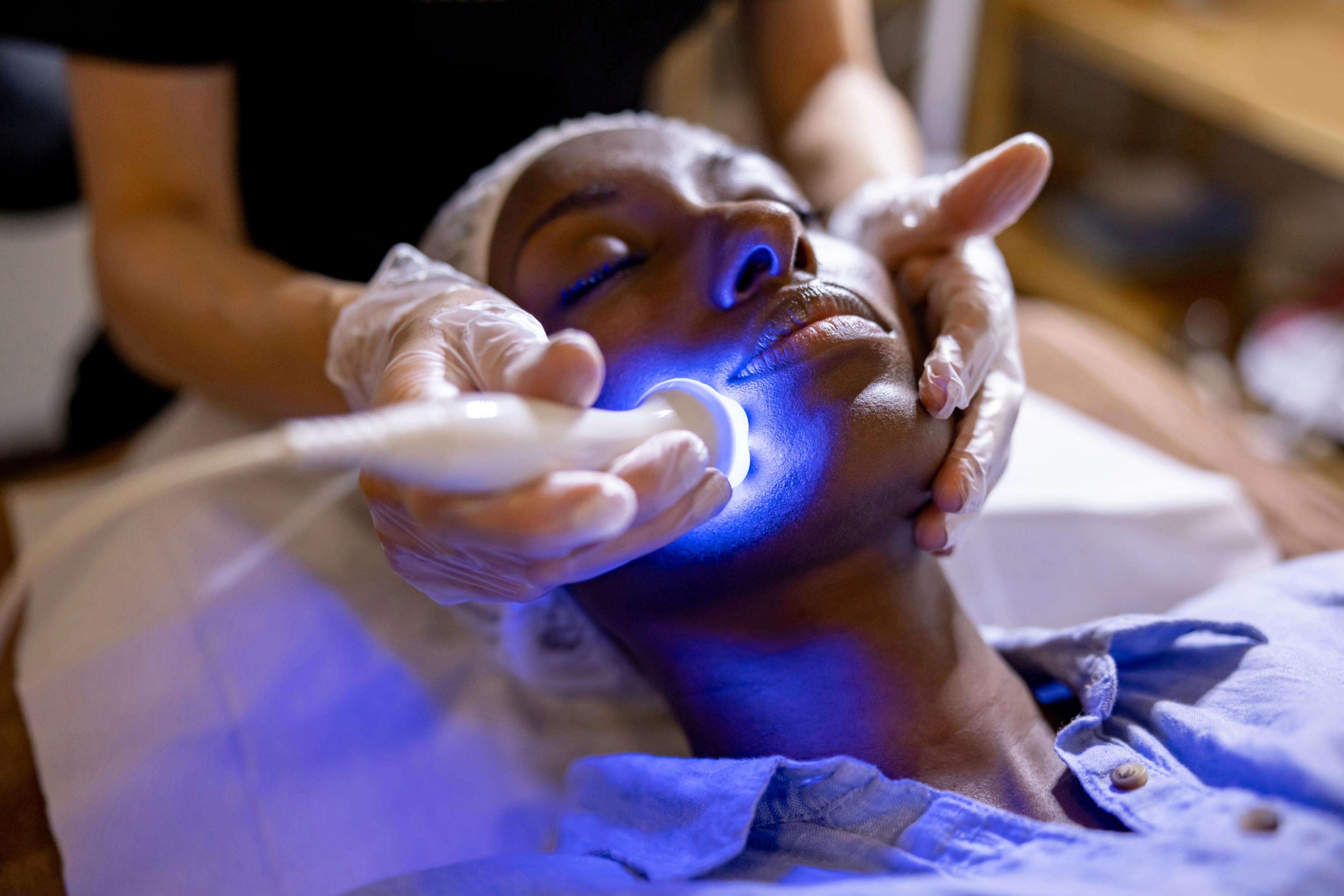
You may have heard of red light therapy – a noninvasive treatment used to treat skin issues like rosacea, wrinkles, acne and scars – but how about blue light therapy? Some people may prefer blue light therapy to other forms of LED light therapy because of its ability to treat acne.
Blue, red, yellow and near-infrared light therapies all fall under the LED light therapy umbrella. LED light therapy is a skincare treatment method that uses specific wavelengths of light by penetrating the skin to stimulate cellular function and improve skin problems.
Blue light is often discussed in a negative light when it comes to topics like eye strain and sleep disruption. It may not be for everyone. However, researchers have found it to be beneficial in reducing skin cancer risk and improving the skin’s appearance.
What does blue light therapy do?
Blue light therapy benefits include clearing up acne and precancerous spots known as actinic keratoses, according to the Cleveland Clinic. Blue light therapy is most often used as part of a treatment called photodynamic therapy (PDT), which uses special medications in conjunction with light to kill cancer cells. This type of therapy can be effective in treating actinic keratoses, which are reddish, scaly patches caused by severe sun damage.
A dermatologist or other health care provider treats actinic keratoses with PDT by applying photosensitizing medication to the skin to make the treated area sensitive to damage caused by light. Blue light is then applied to activate the medication, according to the American Cancer Society. Following the treatment – which typically takes about 15 minutes – the damaged skin flakes off and leaves an individual with healthier looking skin.
Does blue light actually help acne?
Many studies have found blue light therapy to be effective in treating mild to moderate acne. Many cases of common acne are caused by a bacterium that lives on the skin called Propionibacterium acnes (P. acnes). These acnes produce porphyrins that can cause inflammation. Porphyrins are sensitive to blue wavelengths of light, making blue light therapy an effective treatment method to kill bacteria in the pores, leading to less inflammation for some people.
Blue light therapy led to partial resolution of acne lesions in 94% of participants as part of a 2024 study. Participants had an average 43% improvement in total lesion count by the fourth week of the study. However, blue light therapy doesn’t work for everyone and is not typically recommended for severe nodular or cystic acne.
Blue light therapy benefits for older adults
A new 2025 study found additional benefits to blue light therapy beyond skin care treatment. The small study examining 36 older adults found blue light to improve sleep quality and increase activity levels in older adults.
Participants sat in front of a light box emitting either a blue-enriched white light or a control white light for approximately two hours each morning or two hours each evening for three weeks. They then switched to the other light for another three weeks.
The results showed morning blue light therapy led to:
- Greater activity
- Earlier bedtimes
- Regular sleep patterns
- Improved sleep quality
Researchers did note that longer evening blue light exposure made it more difficult to fall asleep and caused more restless nights, suggesting morning blue light exposure might be most beneficial. Morning blue light "wakes up" the brain, which increases alertness and synchronizes the sleep-wake cycle, according to researchers in the study.
When should you not use blue light therapy?
Blue light therapy is not recommended for those with photosensitivity disorders, according to the Cleveland Clinic, which are diseases that cause sensitivity to the sun. Blue light does have some side effects when it’s used with a photosensitizer as part of PDT for skin cancer or sun damage and can cause irritation, sun sensitivity and peeling in some individuals.
However, apart from photosensitivity issues, researchers have not found many side effects of blue light therapy. Some individuals may experience redness or dry skin that goes away on its own after a few days.
Blue light therapy devices can be purchased online or in stores, but the safest results are produced when applied by a trained health care professional, usually a dermatologist or specialized technician. Talk to your primary care provider about blue light therapy before trying it.
Photo credit: Getty Images
Continue reading: