Should I Wear Compression Socks?

Lindsay Knake
| 3 min read
Lindsay Knake is a brand journalist and project planner for Blue Cross Blue Shield of Michigan. She previously worked in higher education and for The Saginaw News and Ann Arbor News.
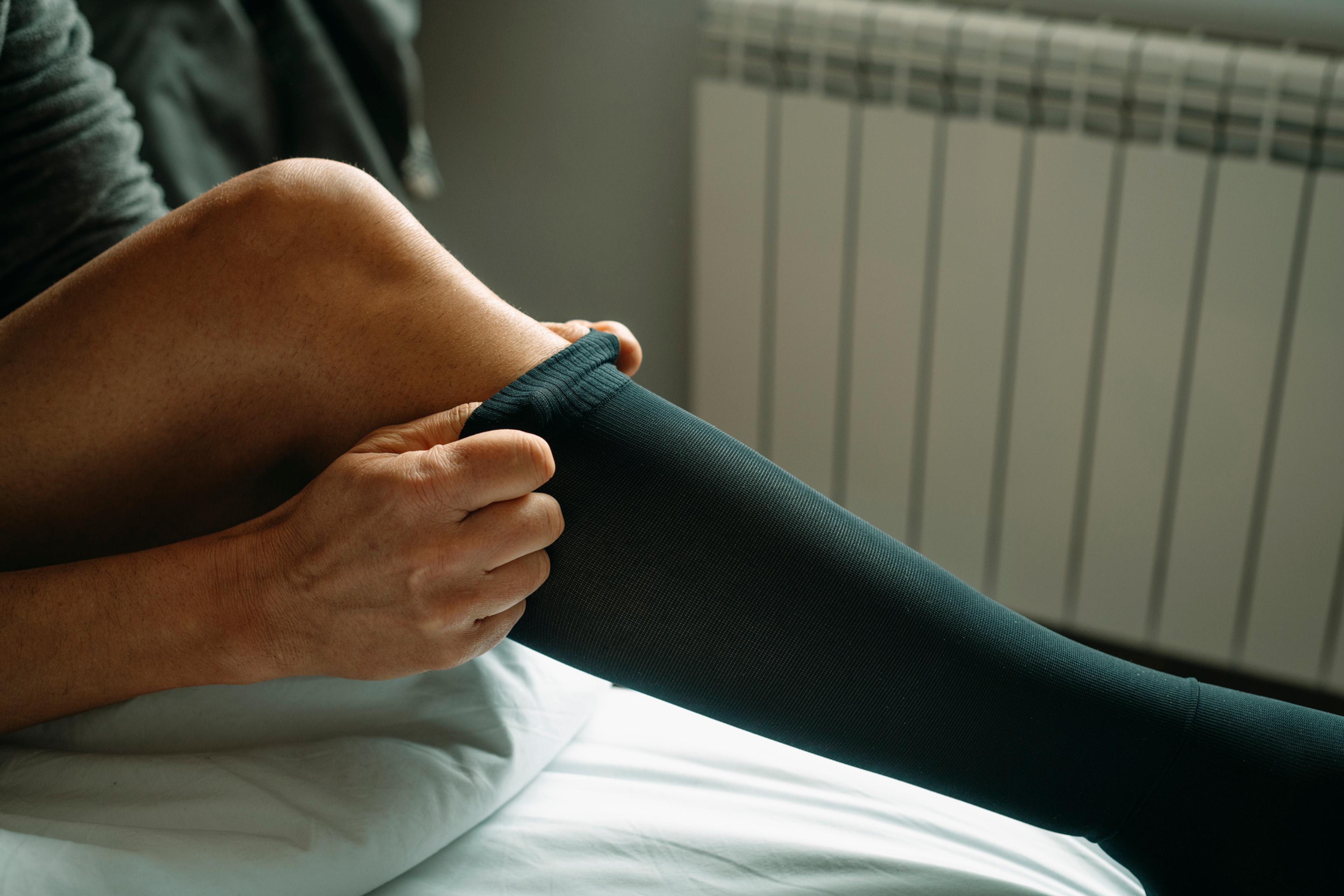
Whether getting on a flight, recovering from a hard workout or working to manage swelling, you may don a pair of compression socks to help.
These socks, once primarily used to help prevent strokes, are increasingly popular among athletes and travelers. Are there benefits to compression socks? When should you wear them? Let’s take a look.
What do compression socks do?
Compression socks are tight, commonly knee-high socks that apply pressure to your legs and the blood vessels within. According to Harvard Health, compression socks are meant to:
- Improve circulation
- Decrease swelling
- Prevent blood clots
- Possibly provide pain relief
There are two main types of compression socks: graduated and anti-embolism, according to the Cleveland Clinic. Graduated compression socks are the most common, available at sporting goods or drug stores, and provide the highest compression at the ankle and loosen with height. These socks typically have light to medium compression. While a company may market them as “light,” “medium” or “heavy” compression, there isn’t a standard for what that means.
Anti-embolism socks are designed for circulation and blood clot prevention and may be used most often by people recovering from surgery. These are more likely to be medical grade compression socks, which a doctor may recommend or prescribe.
Venous insufficiency
Veins in the legs have valves to flow against gravity and return to the heart, but these can fail over time in some people, according to Harvard Health. This is a condition called venous insufficiency, and it can cause blood to pool in the legs and swell. Other possible side effects of venous insufficiency include blood clots, damage to veins and varicose veins.
A primary care provider (PCP) or vascular specialist may recommend compression socks to help the veins function and reduce swelling.
Compression socks on flights
You may have heard compression socks can help prevent blood clots on long flights. Studies have found a very slim decrease in risk of blood clots among people who are already at high risk of deep vein thrombosis, according to the American Heart Association. The conclusions from the research were not enough to suggest compression socks will help people at average risk.
If you are at high risk of blood clots or are curious about whether compression socks could benefit you during a flight, talk to your PCP. For most people, they are harmless to wear. Additionally, drinking plenty of water, flexing your leg muscles and moving every couple of hours can also help to prevent blood clots during long flights.
Compression socks for athletes
Compression socks have been popular among runners and triathletes to improve circulation and remove lactic acid from muscles. There isn’t enough data to suggest they improve oxygen delivery to muscles during a workout or shorten recovery time after workouts, according to Harvard Health.
If you enjoy the gentle squeeze of compression socks, they aren’t likely to do harm for most people. Athletes may not get a major physical benefit from them, but the pressure can provide a feeling of relief from sore muscles and aid with relaxation.
How long should I wear compression socks?
For most people, it’s safe to wear compression socks for several hours at a time, according to the Cleveland Clinic. When starting to wear them, start with a shorter amount of time and gradually increase the duration. You can take them off if they become uncomfortable. The heavy fabric of the socks can be rough on your skin.
The benefits of compression socks are reduced while lying down, so wearing them to bed typically doesn’t provide benefits for most people.
Talk to your PCP before you start to wear them, especially if you are looking for medical grade compression or if you have peripheral artery disease, high blood pressure or another heart or vein condition.
Image: Getty Images
Related: