HUDA Clinic in Detroit Focuses on Health Literacy to Improve Health and Prevent Expensive Complications of Chronic Diseases
Lindsay Knake
| 3 min read
Lindsay Knake is a brand journalist and project planner for Blue Cross Blue Shield of Michigan. She previously worked in higher education and for The Saginaw News and Ann Arbor News.

Medication for high blood pressure can cost $53 a year. But if hypertension leads to other chronic conditions such as chronic kidney disease (CKD), treatment can cost $31,000 a year.
Preventing these complicated, expensive chronic conditions for Detroit residents is something the staff and volunteers at HUDA Clinic are working hard at. This one-stop clinic treats under- and uninsured individuals in Detroit and throughout Southeast Michigan. Open since 2004, HUDA is among the largest free clinics in Michigan. This clinic has been a recipient of Blue Cross Blue Shield of Michigan’s Strengthening the Safety Net grant since it opened.
“We don't want anybody to go without for financial reasons, if we can prevent that at all,” said Tracy Wilson, executive director.
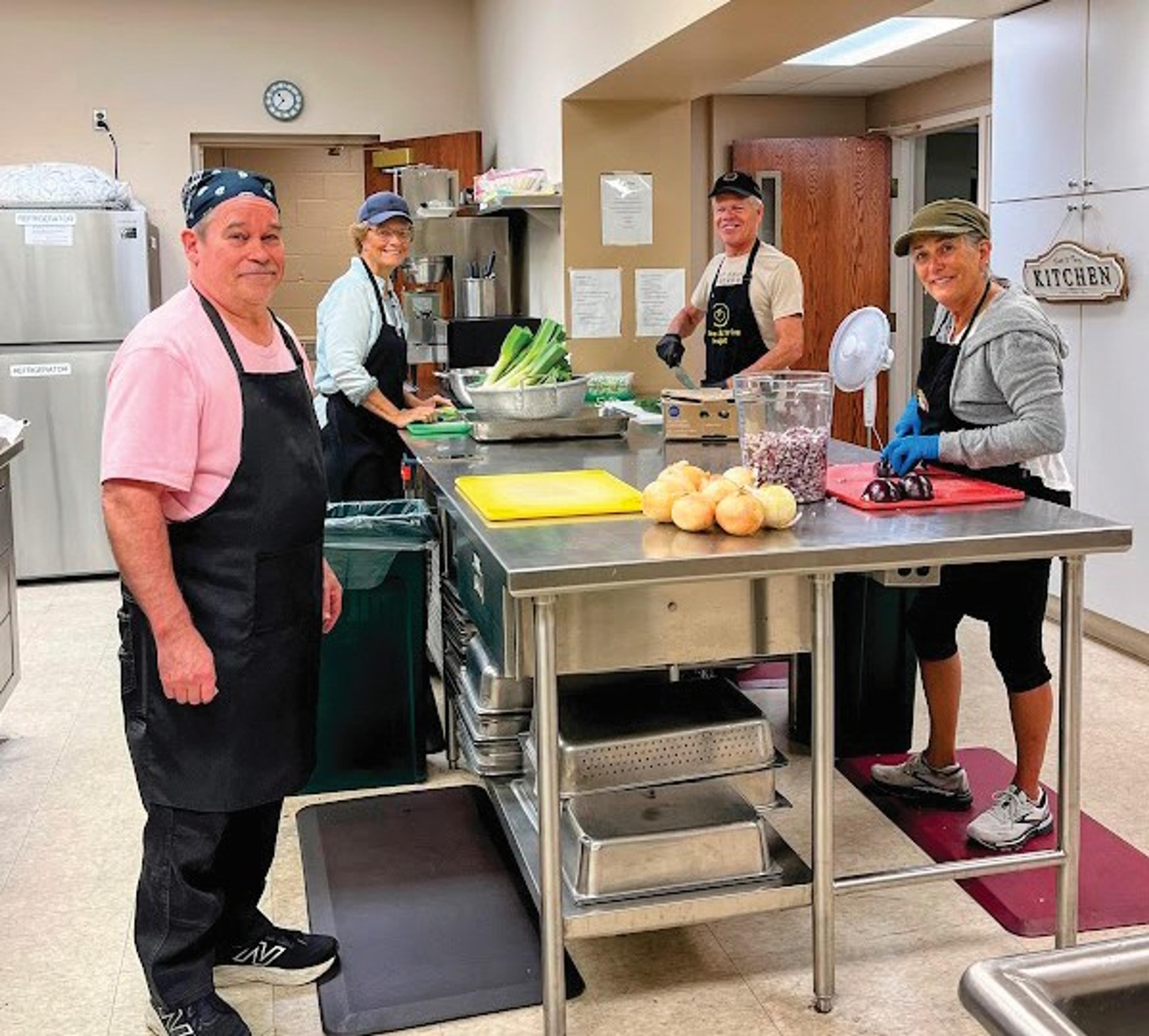
HUDA Clinic has 163 providers and undergraduate and graduate volunteers from Michigan universities, bringing the total number of staff and volunteers to about 600. Staff provide primary care and dental services, along with specialty care such as psychiatry, cardiology, nephrology, gastroenterology and women's health.An in-house lab and pharmacy make providing care easier for local residents. For the care they don’t provide, HUDA gives referrals, often for no or low-cost treatments.
The most commonconditions HUDA sees in patients are hypertension and diabetes.
“What I've really noticed lately is the patients are coming to us sicker than they ever have been,” Wilson said. “When we're talking about hypertension, so many people are walking around completely asymptomatic, completely unaware that they even have it. And meanwhile, it's just wreaking havoc in their bodies,” Wilson said.
And the reason? While economic factors such as poverty and food insecurity are certainly part of it, low health literacy is the driving force behind the rates of high blood pressure, Wilson said. Untreated hypertension, which often has few or no symptoms, can progress into conditions like CKD. Many patients are coming to HUDA clinic in later stages of CKD, which also shows few signs in the early stages. Untreated CKD can lead to kidney failure, requiring dialysis or a kidney transplant.
HUDA Clinic discovered the low health literacy rates in a recent study they did with student interns and volunteers. Intern Fatema Sikdar, an honorspublic health student at Wayne State University, wanted to look into hypertension management because of her family’s experience with the condition.
The students looked at 613 HUDA Clinic patients and found completing high school meant you are more likely to have better blood pressure control. They also found Detroit residents have a higher occurrence of high blood pressure, about 47% compared to 37% across the rest of the state.
With this information, HUDA clinic is working on community-based interventions to increase health literacy on hypertension and other chronic conditions. HUDA Clinic staff are working with Authority Health in Detroit and the doctor of nurse practitioner program at Wayne State to educate future healthcare providers.
By diagnosing high blood pressure earlier, healthcare providers can treat it with medication that costs $2.20 a month. This lowers a patient’s risk of developing more severe, complicated chronic conditions such as CKD and coronary artery disease that can be debilitating and cost tens of thousands of dollars a month to manage and treat, Wilson said.
“I am grateful we have this clinic because we are helping a lot of people out there,” said Sikdar.
Photo credit: Getty Images